
Building Transcript Datasets for LLM Fine-Tuning
Zied · 6/25/2026 · 7 min read

Building Transcript Datasets for LLM Fine-Tuning
Most teams fine-tuning a model reach for the same crowded sources: scraped web pages, public Q&A dumps, synthetic data. Meanwhile one of the largest spoken-language corpora on the planet sits mostly untouched. YouTube alone takes in more than 500 hours of video every minute (Global Media Insight, 2025). Buried in that firehose are tutorials, interviews, lectures, and product walkthroughs—exactly the conversational, instructional language fine-tuning datasets often lack.
This guide walks through building a transcript dataset you can actually train on: sourcing at scale, cleaning the mess, structuring JSONL records, and staying on the right side of licensing. It's written for engineers who'd rather ship a clean pipeline than babysit scrapers.
Key Takeaways
- YouTube ingests 500+ hours per minute across 80+ languages—a huge, under-mined training source (Global Media Insight, 2025).
- Roughly 73% of failing enterprise fine-tunes trace to data quality, not the model (AgamiSoft, 2025).
- Source, clean, and format as one pipeline; dedupe and normalize before writing JSONL.
Why Are Video Transcripts an Underused Training Source?
In 2025, high-quality public text data is projected to run thin somewhere between 2025 and 2030, depending on how aggressively labs overtrain (Epoch AI, 2024). Video transcripts are an obvious hedge: they hold spoken, conversational, and instructional language that written corpora underrepresent.
Think about what a transcript actually contains. Someone explaining a concept out loud uses different phrasing than a blog post. They backtrack, give examples, answer objections. For instruction-following and dialogue tasks, that texture is gold.
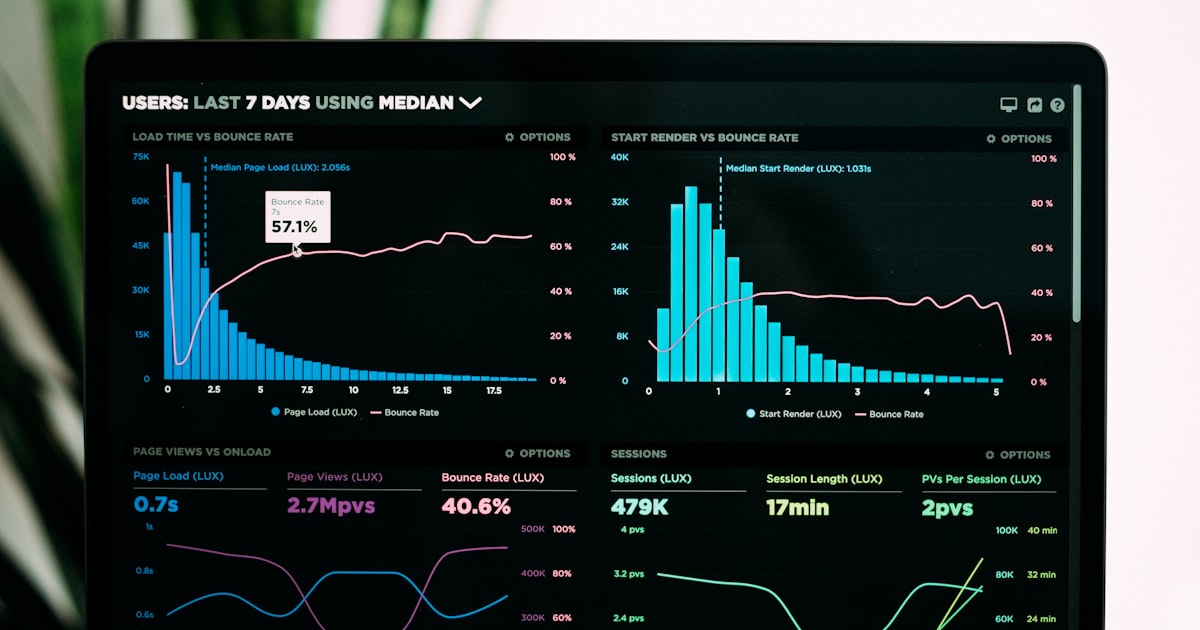
Coverage is the other draw. YouTube spans 80+ languages across 100+ countries (Global Media Insight, 2025), so you can build multilingual sets without hunting down a separate corpus per language. Niche domains—obscure tooling, regional dialects, specialist lectures—show up on video long before they get written down.
The catch? Raw transcripts are noisy, and YouTube fights automated access hard. That's the real work, and it's where most of this post lives.
How Do You Source Transcripts at Scale Across Channels and Playlists?
Sourcing at scale means three repeatable steps: resolve a channel, enumerate its videos, then fetch each transcript. Do it for one channel and you have a script; do it for thousands and you need reliable infrastructure that survives IP blocks, proxies, and retries—the exact failure modes that break naive scrapers.
Start by mapping the territory. Given a channel handle, resolve it to a channel ID, list the uploads or pull playlist items, and collect video IDs. Then request the transcript for each ID as structured JSON. A loop over playlist items, fanned out across workers, gives you a queue you can checkpoint and resume.
Here's the shape of a fetch against a managed transcript endpoint:
import requests

API = "https://api.getyoutubetranscriber.com/v1/transcript"
HEADERS = {"Authorization": "Bearer YOUR_TOKEN"}

def fetch_transcript(video_id, lang="en"):
    r = requests.get(API, headers=HEADERS,
                     params={"video_id": video_id, "lang": lang}, timeout=60)
    r.raise_for_status()
    return r.json()  # clean transcript as JSON
const res = await fetch(
  `https://api.getyoutubetranscriber.com/v1/transcript?video_id=${id}&lang=en`,
  { headers: { Authorization: "Bearer YOUR_TOKEN" } }
);
const data = await res.json();
The reason teams reach for a hosted API here isn't laziness. The open-source youtube-transcript-api library works great until YouTube starts returning blocks and CAPTCHAs at volume. We've covered that failure mode in depth in why youtube-transcript-api gets blocked (and what to do). A service like YouTube Transcriber absorbs the proxy rotation, retries, and anti-bot handling so your ingestion job keeps moving instead of stalling on HTTP 429s.
Our rule of thumb: budget for failure. At dataset scale, a small fraction of videos will have disabled captions or be region-locked. Log those, skip them, and keep going—don't let one bad ID stall the batch.
If you've never pulled a single transcript before, the mechanics are quick; our walkthrough on getting a YouTube transcript as JSON in 5 minutes covers the first call end to end.
How Do You Clean, Dedupe, and Normalize Transcript Text?
Cleaning is not optional. About 73% of underperforming enterprise fine-tuning projects trace their root cause to training-data quality—distribution mismatch, edge cases, inconsistent labeling—rather than the model or hyperparameters (AgamiSoft, 2025). Garbage transcripts produce a garbage fine-tune, no matter how good the base model is.
Auto-generated captions arrive with predictable junk: [Music] tags, [Applause], repeated filler, broken sentence boundaries, and missing punctuation. Your normalization pass should:
- Strip bracketed non-speech markers (
[Music],[Laughter]). - Collapse repeated whitespace and fix obvious caption line breaks.
- Restore casing and sentence boundaries where feasible.
- Drop ultra-short clips and segments below a length threshold.
- Tag or remove transcripts that are mostly music or silence.
Then dedupe. Transcripts repeat far more than you'd expect—re-uploads, mirrors, the same talk posted to three channels. Run exact-hash dedup first to kill identical copies cheaply. Then catch near-duplicates with MinHash/LSH or embedding-similarity clustering. Why bother? Duplicate-heavy training data wastes compute and skews the model toward whatever got copied most.
A pragmatic normalization step in Python:
import re

NON_SPEECH = re.compile(r"\[(music|applause|laughter|inaudible)\]", re.I)

def normalize(text: str) -> str:
    text = NON_SPEECH.sub("", text)
    text = re.sub(r"\s+", " ", text).strip()
    return text

def keep(text: str, min_words: int = 25) -> bool:
    return len(text.split()) >= min_words
Keep a rejected-records log. When your fine-tune behaves oddly later, that log is the first place you'll look.
How Do You Structure JSONL Records for Fine-Tuning Pipelines?
JSONL—one JSON object per line—is the de facto standard for fine-tuning, and for good reason. Each line is a complete, self-contained training example, so the file streams without loading into memory, and a single malformed record fails in isolation instead of corrupting the whole set.
What goes on each line depends on your training task. For instruction tuning, a messages array mirrors chat format. For older prompt/completion setups, two fields suffice. Carry provenance metadata so you can trace any example back to its video.
import json

def to_record(video_id, title, transcript):
    return {
        "messages": [
            {"role": "system", "content": "You summarize technical talks."},
            {"role": "user", "content": f"Summarize this transcript:\n{transcript}"},
            {"role": "assistant", "content": ""}  # fill with your target label
        ],
        "meta": {"source": "youtube", "video_id": video_id, "title": title}
    }

with open("dataset.jsonl", "w") as f:
    for rec in records:
        f.write(json.dumps(rec, ensure_ascii=False) + "\n")
A few rules keep downstream tooling happy. Validate every line parses as JSON before you ship the file. Keep ensure_ascii=False so multilingual transcripts survive intact. Hold out a clean validation split early, before any augmentation, so your eval numbers stay honest. And version the dataset—data drift is real, and you'll want to diff what changed between training runs.
What Are the Licensing and Ethics Considerations?
Transcripts are not a license-free zone. The underlying video is copyrighted, platform terms of service apply, and the legality of training on third-party content remains contested—copyright filtering of pre-training data is an active research area (arXiv, 2025). Treat sourcing as a compliance task, not just an engineering one.
Practical guardrails that keep you defensible:
- Prefer content you own, Creative Commons material, or transcripts you have explicit permission to use.
- Record provenance per video: channel, video ID, license, and retrieval date.
- Honor creator and platform signals; don't circumvent access controls.
- Consult legal counsel before training on third-party content at scale.
There's an ethical layer beyond the legal one. Creators didn't necessarily expect their words to become training data. Respecting attribution, offering opt-outs where you can, and documenting your dataset's composition isn't just risk management—it's how this stays sustainable for everyone building in the space.
Build the Dataset, Not the Scraper
The hard part of transcript datasets was never the model. It's getting clean, well-licensed, deduplicated text out of a platform that actively resists automation. A managed transcript API removes the scraping headache—proxies, retries, anti-bot challenges, 125+ languages—so your energy goes into normalization, JSONL formatting, and evaluation, where it actually moves the needle.
If you want to test the sourcing half of this pipeline, YouTube Transcriber starts with 100 free credits and no credit card. Point it at a playlist, pull clean JSON transcripts, and see how fast a real dataset comes together. The cleaning and JSONL work is yours—but the part that usually breaks won't be.